Best Time for a Kīlauea Volcano Tour
When to take a Kīlauea volcano tour from Kona: crowds, rain, temperatures and sunset by month, and why the eruption keeps no season.
Any month works for a Kīlauea tour from Kona, because the eruption follows the volcano’s own rhythm and not the calendar; choose your month for crowds, rain and daylight instead. September is the quietest month on Hawaiʻi Island and July and December the busiest, the summit is cool and damp all year, and winter’s early sunsets put the evening tours at the crater rim as the light goes. Once you have a date, compare the volcano tours from Kona by time in the park, pickup area and what each one includes.
Check Availability
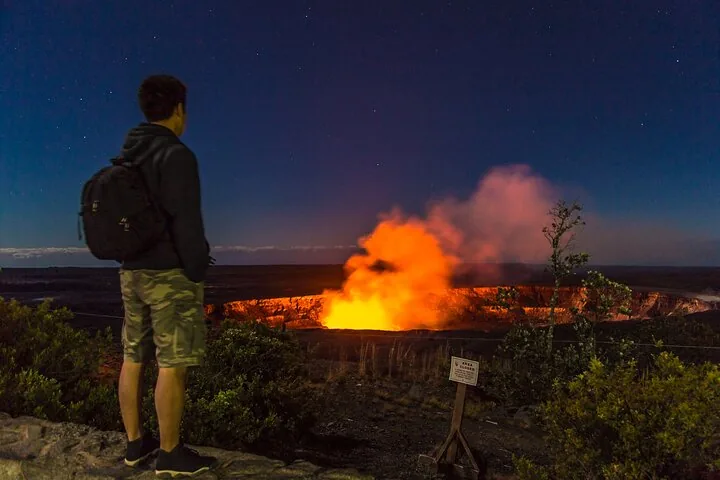
Small Group Big Island Twilight Volcano and Stargazing Tour
- 4.9/5 (1,758 reviews)
- About 12 hours
- Free cancellation
- Operated by Wasabi Tours Hawaii
Includes Hotel pickup and drop-off on the Kona and Kohala coasts · Picnic lunch and a restaurant dinner (vegetarian or …
You'll choose your date and complete the booking on Viator. Free cancellation up to 24 hours before departure.
Same tour, also on GetYourGuide
From $309 per person · ★ 4.8 from 199 GetYourGuide reviews
Each platform sets its own price and collects its own reviews, so compare both before you book on Viator.
The eruption has no season
Kīlauea’s current summit eruption began on 23 December 2024 inside Halemaʻumaʻu crater, and it runs in episodes. A fountaining episode usually lasts hours, and the pauses between episodes have lasted days to weeks. The gap between Episode 54 (25 August 2026) and Episode 55 (17 October 2026) was 53 days.
As of the USGS Hawaiian Volcano Observatory’s update of 23 October 2026, the eruption is paused after Episode 55. HVO’s preliminary window for Episode 56 is 29 October to 5 November 2026, and HVO notes that the forecast is uncertain. Check the USGS Kīlauea page before you travel, and the NPS eruption-viewing page for where to look.
No month, and no tour, can promise lava or glow. During a pause there is little to see beyond, at most, a faint glow from older lava, and fog or rain can hide the crater on any day of the year. Book the trip for the craters, steam vents, lava fields and lava tube, and treat any glow as a bonus. Our Kīlauea lava viewing page explains what you can realistically expect.
Crowds and sunset, month by month
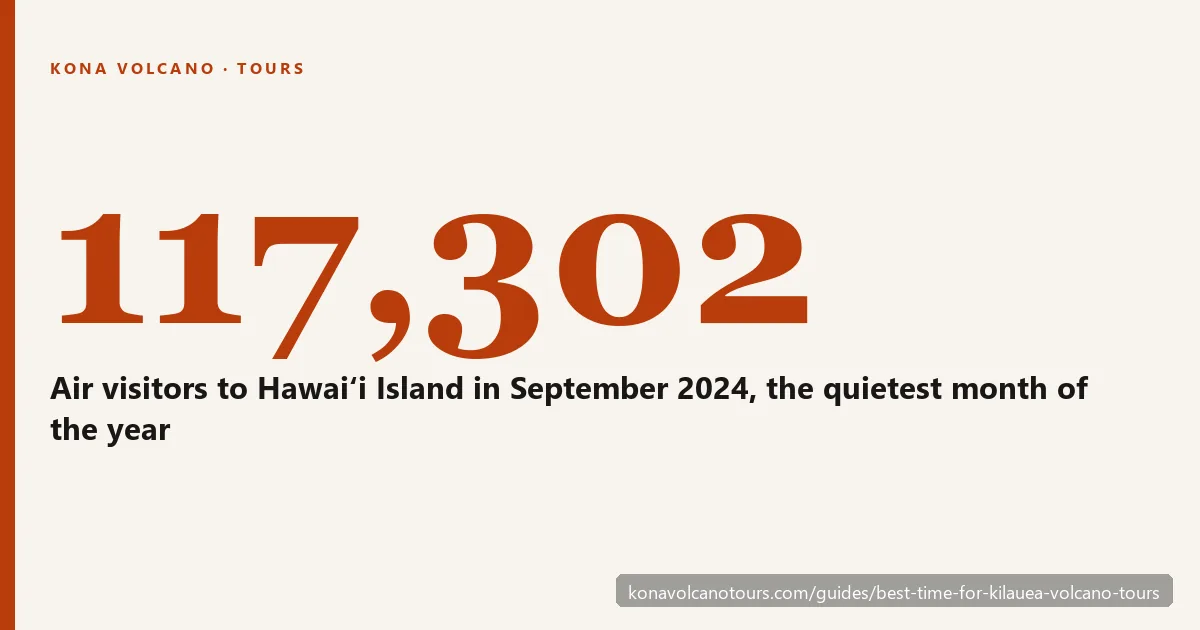
The State of Hawaiʻi counts air visitors to Hawaiʻi Island every month. The 2024 figures below are the latest full-year breakdown by island. The sunset times are for Kailua-Kona on the 15th of each month in 2026; the park lies about 2° of longitude farther east, so the sun sets there roughly 8 to 10 minutes earlier.
| Month | Air visitors to Hawaiʻi Island (2024) | Kona sunset (15th, 2026) | Crowd level |
|---|---|---|---|
| January | 143,878 | 6:06 pm | Moderate |
| February | 138,232 | 6:24 pm | Moderate |
| March | 158,729 | 6:34 pm | Busy |
| April | 137,007 | 6:42 pm | Moderate |
| May | 133,971 | 6:52 pm | Quiet |
| June | 156,078 | 7:04 pm | Busy |
| July | 168,680 | 7:06 pm | Busiest |
| August | 146,104 | 6:52 pm | Moderate |
| September | 117,302 | 6:27 pm | Quietest |
| October | 133,648 | 6:01 pm | Quiet |
| November | 133,444 | 5:45 pm | Quiet |
| December | 168,308 | 5:48 pm | Busiest |
July and December are the peaks, followed by March and June. September is the quiet month by a wide margin, with May, October and November close behind.
Crowds show at the summit more than on the road. NPS warns that parking lots can be full by 10 a.m., traffic rises during eruptions, and 5 to 9 p.m. is the busiest window at Kīlauea Overlook. In July, December or during an active episode, expect shared viewpoints and book your tour further ahead.
Other Experiences
Other experiences you might enjoy
More ways to reach Kīlauea from Kona: full-day park tours, twilight and dinner trips, and circle-island days through Kaʻū and Hilo.


Wet season, dry season and the summit
The National Weather Service in Honolulu treats October to April as Hawaiʻi’s wet season and May to September as the dry season. On the Kona coast the difference hardly shows: Kona airport averages 13.4 inches of rain a year. The volcano sits on the wet side of the island at about 4,000 ft, and park headquarters averages 104.4 inches, about eight times as much. Hilo, which some circle-island tours pass through, averages 130.2 inches.
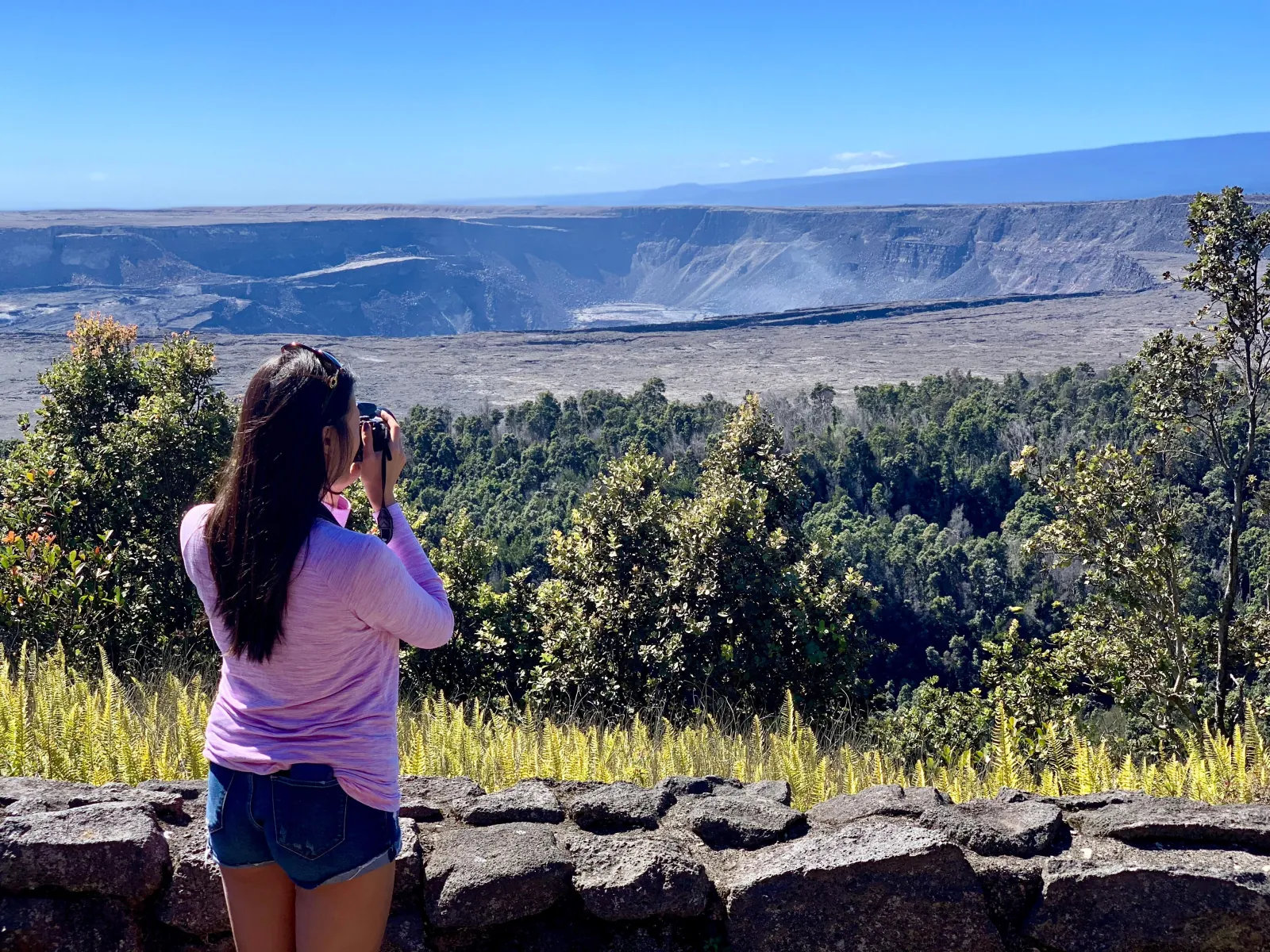
So you can leave a sunny Kona morning and reach a misty crater rim in any month; NPS describes the summit as rainy and chilly at any time of year.
Tours do not stop for ordinary rain. Wasabi Tours says its Twilight Volcano and Stargazing Tour runs rain or shine and gives no refund for closures or itinerary changes outside its control, and The Volcano Van operates in all weather. Storms are a different matter: in 2026 a March storm with ashfall, then Hurricane Lala in August and Hurricane Nolo in September, closed all or most of the park for stretches. Most areas reopened on 27 September 2026. Check the NPS alerts page in the week of your tour, and keep the free-cancellation window in mind: 24 hours before on the Viator tours here.
Temperatures: Kona versus the crater rim
Kona is warm all year and the summit is cool all year, so the season changes your packing list less than the altitude does.
| Place | Average daily mean, coolest month | Average daily mean, warmest month | Rain per year |
|---|---|---|---|
| Kona airport (33 ft) | 71.2°F | 78.1°F | 13.4 in |
| Park headquarters (3,970 ft) | 56.4°F | 62.7°F | 104.4 in |
Kona’s daytime highs run from about 81°F in January to about 87°F in August. NPS says the summit can be 12 to 15 degrees cooler than sea level, and nights are colder again, so a winter evening at the rim in wind and drizzle feels much cooler than the averages suggest. Several tours lend gear: the Wasabi twilight tour includes a rain and warm jacket, Hawaii Geo Tours provides coats, raincoats and umbrellas, and Kailani’s dinner tour includes a light jacket. Our guide on what to wear on a Kona volcano tour covers the rest.
Winter or summer for an evening tour
Sunset decides how the twilight tours feel. The Wasabi twilight tour picks up across Kona and the Kohala Coast between 9:30 and 10:30 a.m., spends about three hours in the park through the afternoon and twilight, and finishes with dinner and a stargazing stop. In November and December, with Kona sunsets around 5:45 p.m., darkness falls while you are still at the crater. In June and July, with sunsets after 7 p.m., the park visit is mostly in daylight and the darker sky comes later in the evening.
Whether to go by day or after dark is a separate decision, with its own trade-offs on visibility, return times and photography. Our Kīlauea day vs night tours page sets those out.
Frequently asked questions
What is the best month to visit Volcanoes National Park?
September, if you want the fewest people: it had the lowest air arrivals on Hawaiʻi Island in 2024 (117,302) and falls in the dry season. May, October and November are also quiet. No month improves your chance of seeing lava, since the eruption runs on its own schedule.
How often does Kīlauea erupt?
The current summit eruption has been episodic since 23 December 2024. Fountaining episodes usually last hours, with pauses of days to weeks between them; Episode 55 on 17 October 2026 came 53 days after Episode 54. As of 23 October 2026 it was paused, with a preliminary Episode 56 window of 29 October to 5 November.
Is Kīlauea open for tourists?
Yes. Hawaiʻi Volcanoes National Park is normally open 24 hours a day, and most areas along the Kīlauea summit reopened on 27 September 2026 after the hurricane closures. The Kīlauea Visitor Center is closed for renovation, with a temporary Welcome Center at Kilauea Military Camp open 9 a.m. to 4:45 p.m.
Does weather cancel volcano tours on the Big Island?
Rain usually does not. The tours on this site run in ordinary rain, and some say so in their listings. Park closures for storms, ash or hurricanes do change or cancel trips, as happened several times in 2026, so check the NPS alerts page and your tour’s cancellation window before the day.
Is the volcano visible in cloud or rain?
Sometimes. NPS notes that fog or rain can prevent eruption viewing altogether, and cloud often moves through the caldera, lifting and closing within the hour. Even on a clear day, glow depends on the eruption being active.
Ready to book?
If an evening at the crater rim appeals, our Kona volcano night tours page compares the twilight and dinner trips. For daytime tours with the most time inside the park, see the volcano tours from Kona on the homepage and check live dates in the availability box.
Spend the Day at Kīlauea, Not at the Wheel
A guide drives the 95 miles from Kona, then walks you through the summit craters, the crater road and a lava tube before the ride home.
Check Availability & Book