What to Wear on a Volcano Tour
What to wear and bring on a volcano tour from Kona: layers for cool, wet summit weather, closed-toe shoes, rain gear, sun and vog cover and night-tour extras.
Dress for two climates: shorts weather on the Kona coast in the morning, and a cool, often wet summit at about 4,000 ft by midday. Wear closed-toe walking shoes and long pants, and carry a warm layer, a rain jacket, a hat, sunglasses and sunscreen; on an evening tour add another warm layer and a flashlight. Several volcano tours from Kona lend jackets or rain gear, but none supplies shoes, so the shoes you leave the hotel in are the ones you hike in.
Check Availability
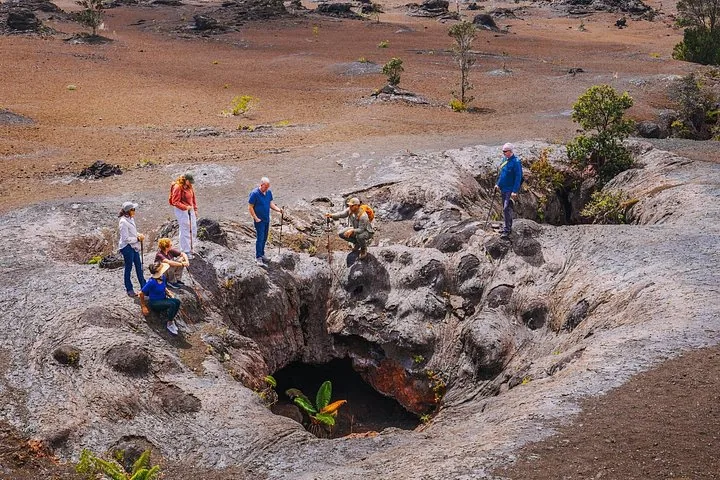
Volcano, Chocolate and Waterfalls of the Big Island
- 4.9/5 (249 reviews)
- About 11.5 hours
- Free cancellation
- Operated by Hawaii Forest &Trail
Includes National Park Certified interpretive guide · Park entrance and chocolate farm fees · Deli-style lunch: turkey, ham, …
You'll choose your date and complete the booking on Viator. Free cancellation up to 24 hours before departure.
Same tour, also on GetYourGuide
From $323 per person · ★ 4.7 from 80 GetYourGuide reviews
Each platform sets its own price and collects its own reviews, so compare both before you book on Viator.
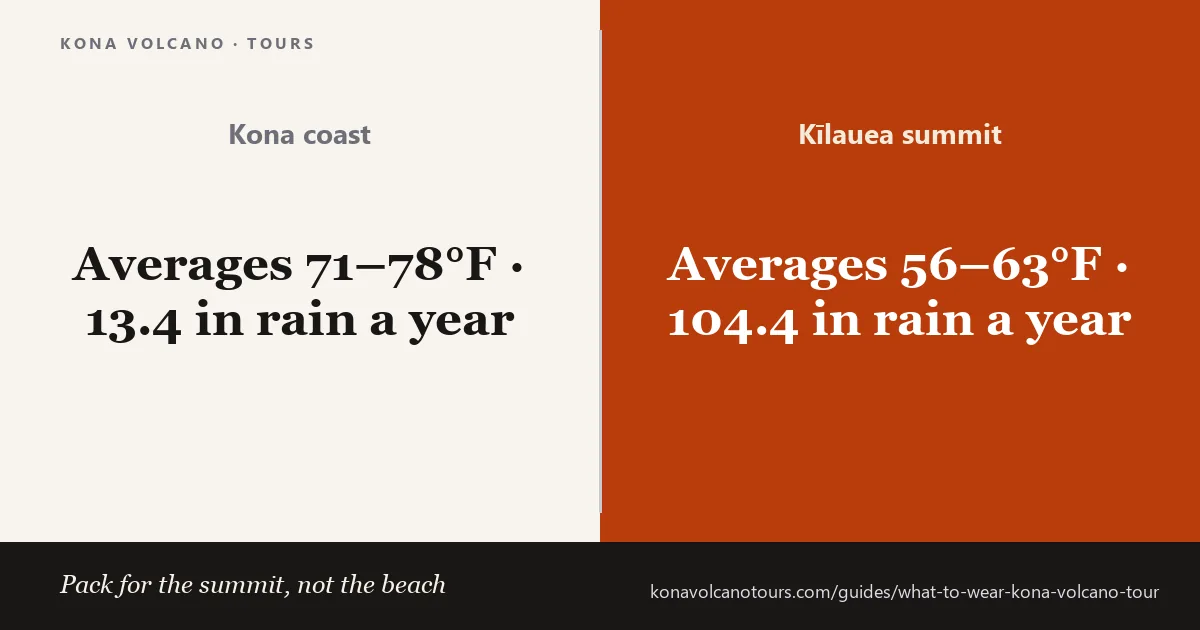
Kona and the summit are two different climates
The 30-year normals in the State of Hawaiʻi Data Book show why a Kona hotel is no guide to the crater rim. NPS adds that the summit “may be 12 to 15 degrees cooler than at sea level” and “may be rainy and chilly any time of the year”.
| Place | Elevation | Average daily temperature, coolest month | Average daily temperature, warmest month | Rain per year |
|---|---|---|---|---|
| Kona Airport | 33 ft | 71.2°F | 78.1°F | 13.4 in |
| Park headquarters, Kīlauea summit | 3,970 ft | 56.4°F | 62.7°F | 104.4 in |
Those are whole-day averages: 71–78°F on the coast against 56–63°F at the summit. Kona’s afternoon highs run from the low 80s in winter to the high 80s in summer, so you will be warm at pickup. At the summit it is often in the 50s and damp, and after dark it gets colder again, especially with wind and rain. The summit gets close to eight times Kona’s rainfall, so plan for a shower whatever the forecast on the coast says.
Shoes for lava rock, wet trails and cinders
Wear closed-toe walking shoes or light hiking shoes with a grippy sole, and wear a pair you already know. Hawaii Island Experiences says outright that flip-flops and sandals are not recommended on uneven and potentially sharp volcanic terrain, and the Wasabi day tour, The Volcano Van and the Rainbow helicopter flight all ask for closed-toe shoes.
The ground explains why. Old lava is sharp and uneven; NPS describes the path through Nāhuku (Thurston Lava Tube) as steep and often slippery with standing water; the last 300 yards to the Keanakākoʻi viewpoint cross loose cinders. Hawaii Forest & Trail asks guests to manage up to 2 miles on uneven terrain. If your shoes are new, break them in on the Kona coast first. Fitness and trail difficulty are covered on our Kīlauea hiking tours page.
Other Experiences
Other experiences you might enjoy
More volcano tours from Kona to Hawaiʻi Volcanoes National Park, from full-day guided hikes to twilight tours that stay at Kīlauea after dark.

Layers and rain gear, and what each tour lends
Wear a T-shirt or light base layer, a fleece or sweatshirt over it, and a waterproof jacket you can pull on and off at each stop. Avoid a heavy coat: you will move between an air-conditioned van and a cool rim many times a day.
Read your own listing before you pack, because a few operators supply part of the kit.
| Tour | Clothing and gear the listing provides | What the listing asks you to bring or wear |
|---|---|---|
| Volcano, Chocolate & Waterfalls (Hawaii Forest & Trail) | Rain gear, trekking poles, daypacks | Closed-toe walking shoes, sunglasses, hat, sunscreen, a light sweatshirt or jacket, long pants |
| Twilight Volcano & Stargazing (Wasabi) | Use of a rain jacket and a warm jacket | Moderate fitness; some walking on uneven ground |
| Volcanoes, Waterfalls & Coffee Farm (Wasabi) | Jackets | Comfortable closed-toe shoes |
| Volcano Adventure with a Geologist | Coats, raincoats and umbrellas | Not listed |
| Deluxe Volcano Experience with Dinner (Kailani) | A light jacket | Not listed |
| Big Island Highlights (Kailani) | Umbrellas | Not listed |
| Volcanoes National Park Experience | Nothing to wear | Layers including a rain jacket, closed-toe shoes, water, snacks, sunscreen, a hat |
| Volcano Van small group | Nothing to wear | Closed-toe shoes; runs in all weather |
Hawaii Forest & Trail is the most specific, and its day has the most walking, which is why it is featured here. Its list doubles as a good default for any tour: closed shoes, long pants, a light jacket, hat, sunglasses and sunscreen, with the rain shell supplied.
Night tours: the extra layer and a light
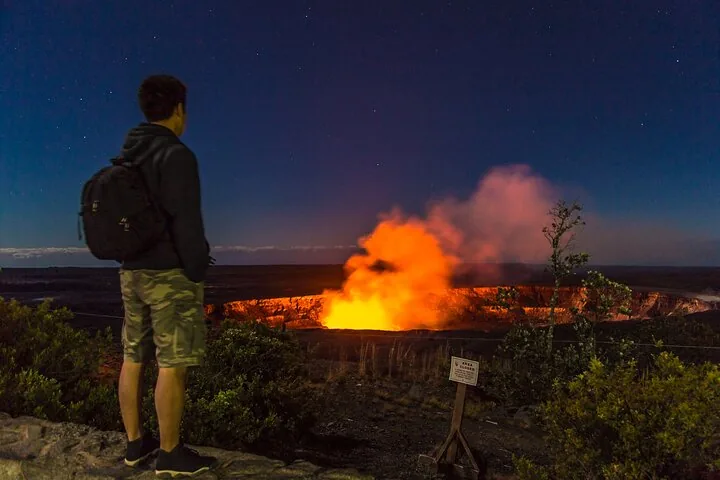
Twilight and evening tours stay at the summit through sunset, the coolest and often windiest part of the day. NPS tells night visitors to “bring warm clothes and raingear” and a headlamp. Add a warm hat or a second fleece to the day kit, and keep your rain jacket on top of the bag.
Nāhuku is lit only from 8 a.m. to 8 p.m., so a flashlight or headlamp helps on any tour that reaches it late. Lava is never guaranteed: as of 23 October 2026, USGS reports the summit eruption paused after Episode 55 on 17 October, with a preliminary and uncertain window of 29 October to 5 November for the next episode. Our night tours page compares the evening options.
Sun, vog and volcanic ash
Pack sun cover as well as rain cover. Hawaii Forest & Trail and Hawaii Island Experiences both ask for sunscreen and a hat, and you will spend the morning on the dry Kona side and at open overlooks.
For ash and tephra after a fountaining episode, NPS recommends eye protection, long sleeves, long pants and a dust mask. Pele’s hair, the fine glass strands that fall downwind, irritates eyes, skin and lungs, so do not pick it up. For volcanic gas (vog), the NPS advice is about where you stand: check the park’s live air-quality map, and if levels are unhealthy, go to another part of the park.
A packing list for the day
| Item | Why | Day tour | Evening tour |
|---|---|---|---|
| Closed-toe walking shoes | Sharp lava, slippery lava tube, cinders | ✓ | ✓ |
| Long pants (or in your bag) | Required by Hawaii Forest & Trail; NPS advice in ashfall | ✓ | ✓ |
| Fleece or sweatshirt | Summit averages 56–63°F | ✓ | ✓ |
| Rain jacket | Over 100 in of rain a year at the summit | ✓ (unless lent) | ✓ |
| Warm hat or second layer | Colder and windier after dark | Optional | ✓ |
| Hat, sunglasses, sunscreen | Dry, sunny Kona side and open overlooks | ✓ | ✓ |
| Flashlight or headlamp | Nāhuku unlit after 8 p.m.; dark viewing areas | Optional | ✓ |
| Water and snacks | Long day; some tours exclude meals | ✓ | ✓ |
| Cash | Many roadside stands are cash-only (Hawaii Island Experiences) | ✓ | ✓ |
Frequently asked questions
What should I wear to Hawaii Volcanoes National Park?
Layers: a T-shirt, a fleece and a rain jacket, with long pants and closed-toe walking shoes. The summit sits at about 4,000 ft and averages 56–63°F through the year, 12 to 15 degrees cooler than Kona, and it is often wet.
What shoes should you wear on a volcano tour?
Closed-toe walking or light hiking shoes with good grip. Lava rock is sharp and uneven, and the Nāhuku lava tube path is steep and often slippery. Several operators require closed-toe shoes.
Is it cold at Volcanoes National Park?
Cool more than cold. Park headquarters averages 56.4°F in the coolest month and 62.7°F in the warmest. Wind, rain and night-time viewing make it feel colder, so bring a warm layer.
Can you wear sandals on a volcano tour?
Not advisable. Hawaii Island Experiences says flip-flops and sandals are not recommended on sharp volcanic terrain, and most listings ask for closed-toe shoes. Keep sandals for the beach.
What extra should I wear on a night volcano tour?
A second warm layer or a hat on top of the day kit, your rain jacket, and a flashlight or headlamp. NPS tells night visitors to bring warm clothes and rain gear.
Ready to book?
Once your bag is packed, read our review of the Hawaii Forest & Trail tour, compare the Volcanoes National Park tours from Kona by time in the park, or check dates on the homepage.
Spend the Day at Kīlauea, Not at the Wheel
A guide drives the 95 miles from Kona, then walks you through the summit craters, the crater road and a lava tube before the ride home.
Check Availability & Book